Same Diagnosis, Seven Different Cures: The WAN-IFRA World News Media Congress in Marseille
Sixty countries, three days, one question: when the platforms stop sending clicks, what is journalism left with? Seven dispatches from Marseille on AI training, copyright, SPUR, Google traffic and what makes newsrooms irreplaceable.



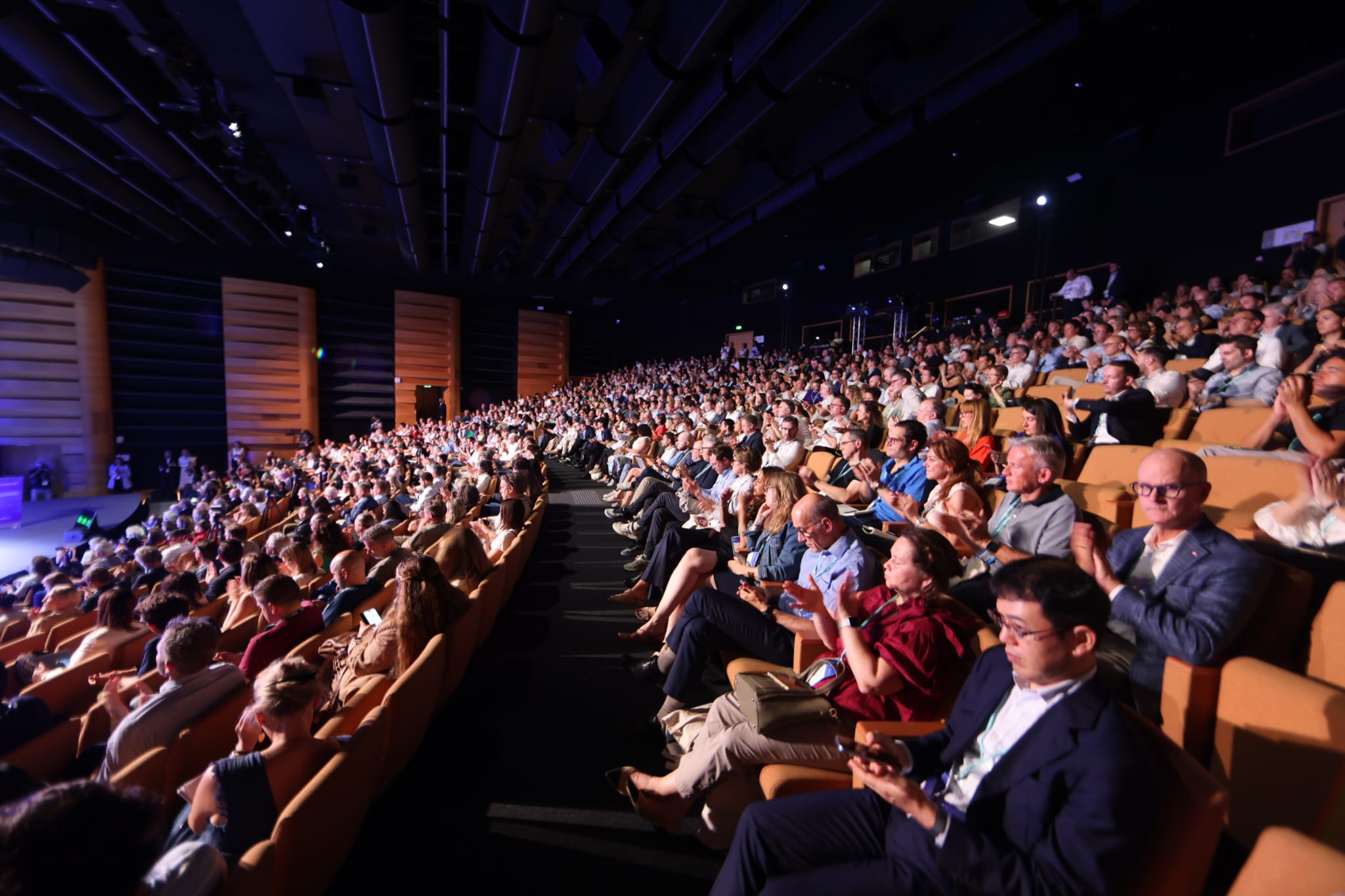
1. AI training is a theft the industry has been too polite to name
A.G. Sulzberger of the New YorkTimes laid out a simple piece of accounting. An AI model is built from four ingredients: talent, compute, energy and data. The first three are paid for lavishly, the fourth is simply taken. The six leading AI firms are worth around 11 trillion dollars between them, yet the licensing deals struck with publishers amount to less than half of one percent of that. His prescription: defend copyright, license only on sustainable terms, and act collectively rather than one frightened newsroom at a time.

2. The Guardian's defences are formidable. Whether they hold is anotherquestion
Katharine Viner runs theGuardian, a paper with no proprietor, no shareholders and 125 million pounds inrecurring reader revenue, 83 percent of it now from outside the United Kingdom.By the standards of the industry, an extraordinary position. And yet the threat she named without hedging was AI's capacity to sever the direct link between the Guardian and its readers. Her answer is SPUR, the publisher coalition launched in February with the BBC, the FT, Sky News and the Telegraph.
3. Collective action or going it alone: SPUR versus Le Monde
WAN-IFRA announced a partnershipwith SPUR and 30 new members moments after Louis Dreyfus of Le Monde explained why he was not joining. Dreyfus has cut his own deals with OpenAI, Perplexity and Meta, arguing that collective bargaining moves too slowly. David Buttle, an architect of SPUR, countered that a deal is the illusion of control. The platforms are paying not to be sued, not for access.
4. OpenAI showed up, listened carefully and committed to nothing concrete
Varun Shetty and Tom Rubin from OpenAI arrived with a coherent message. OpenAI is not hostile to publishers, having backed more than 160 newsrooms through a WAN-IFRA accelerator and a Lenfest Institute cohort. On the value exchange, though, the answers stayed vague. No revenue sharing, publisher dashboards still only on the list, and aspirations where a concrete commitment was asked for.
5. Google is still sending traffic. The exchange rate is deteriorating.
Trigger an AI overview and thetop five organic results lose around 40 percent of their clicks, with noshelter for evergreen content equivalent to the Top Stories box. Buttle drew the structural line. Google at least trades content for traffic. ChatGPT carries no equivalent obligation, and publishers still counting page views are using the wrong instruments.
6. Newsrooms say all the right things. 61 percent spend nothing ontraining.
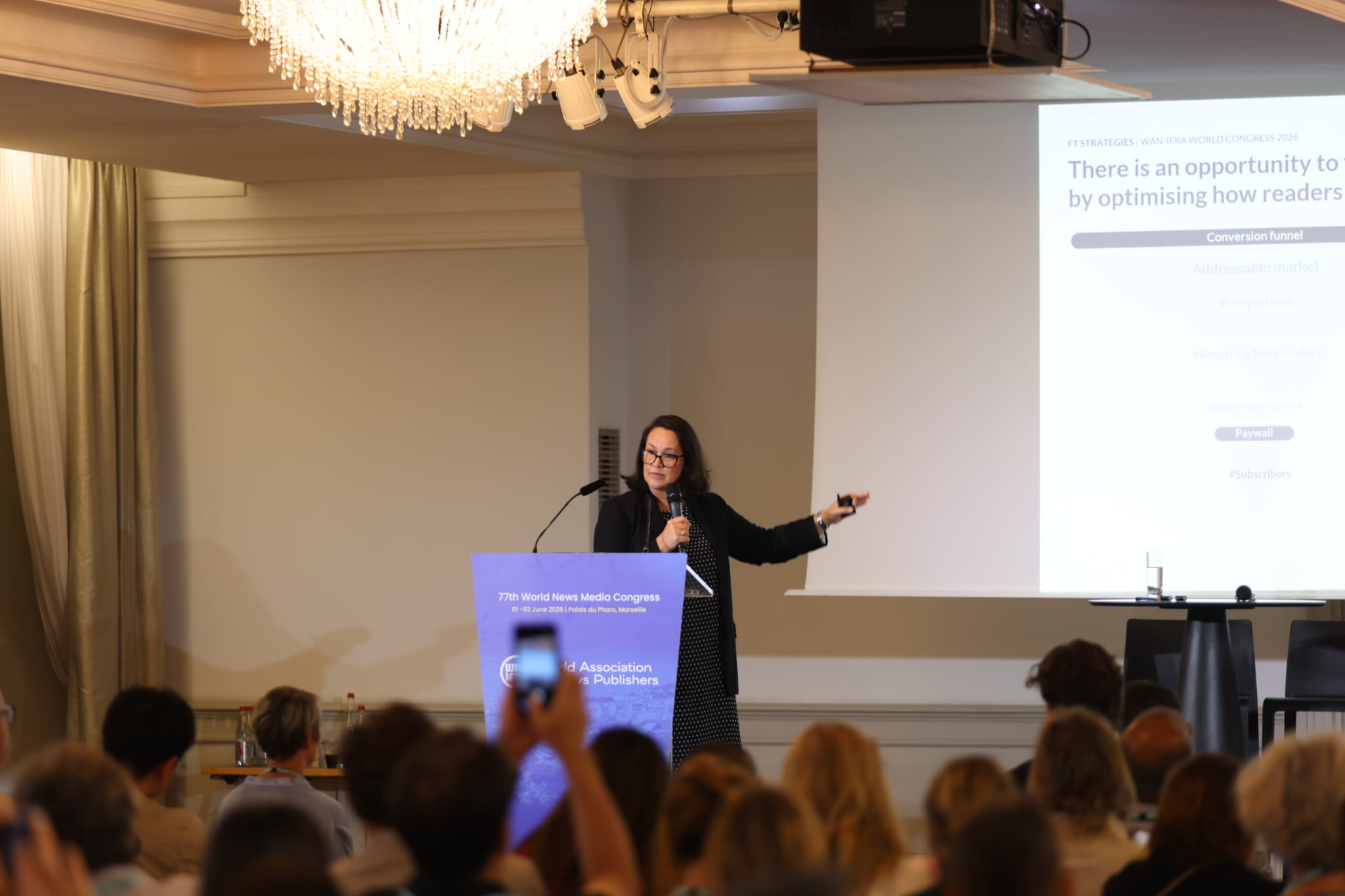
FT Strategies' Future of the Newsrooms study, drawing on 450 responses from 86 countries, argues that newsrooms are entering a community era in which original journalism and direct reader relationships are the edge commodity AI cannot replicate. Yet the gap between rhetoric and practice is stark. Despite the stated urgency, 61 percent of newsrooms report spending nothing on training. The most valuable hire, the session concluded, is no longer the social specialist but the journalist with deep domain knowledge and strong sources.
7. Europe is legislating for media freedom. The money has not followed.
Henna Virkkunen of the European Commission pointed to the Media Freedom Act now being enforced and a proposed 3.2 billion euro Media Plus strand from 2028, the first structured EU support to carve out a dedicated news objective. On copyright, the Commission has opened a call for evidence on the DSM Directive and the text and data mining exception. Catherine Pegard, for the French Culture Ministry, argued that the decisive scale for regulation is now the European one.
What Marseille settled, and what it did not
The congress agreed on the diagnosis and nothing else. Sulzberger litigates, Viner builds coalitions, Dreyfus signs deals, Buttle sets standards. None has yet proved sufficient. Publishers left with the question they arrived with: what do you have that a chatbot cannot replace, and will readers pay for it?
If you'd like to learn more about Purple as an AI-powered digital-first CMS solution, book a demo today.
Über den Autor
John Rahim has been Purple's UK Advisor for years, looking after the platform's business across the UK and Ireland, from requirements analysis for new clients through to rollout. His roots are in digital publishing: he served as SPRYLAB's UK General Manager and still works with publishers such as The Telegraph, The Guardian and DMG Media. He also writes his own newsletter on publishing, advertising and AI.
More practice. More details.
For a deeper dive, you'll find case studies, webinars, and insights from our daily editorial work, featuring concrete use cases, learnings, and best practices for Purple Prompts.
.avif)

Monthly updates you actually need.
Receive product updates, webinar dates, and brief practical insights on editorial, experience, AI, and integrations. Concise, infrequent, and spam-free.