After the click: three lessons for publishers from INMA Media Innovation Week
Only around one in ten people in Spain pays for digital journalism. Only a third of people there trust the news at all. Not the easiest of markets, to put it mildly. Of all places, INMA held this year's Media Innovation Week in Madrid. Then again, that was no accident. Until the end of 2019, Spain's major newspapers had practically no paywalls. Today, the four big publishing groups have around one million digital subscriptions between them, with the market leader alone accounting for more than 475,000.


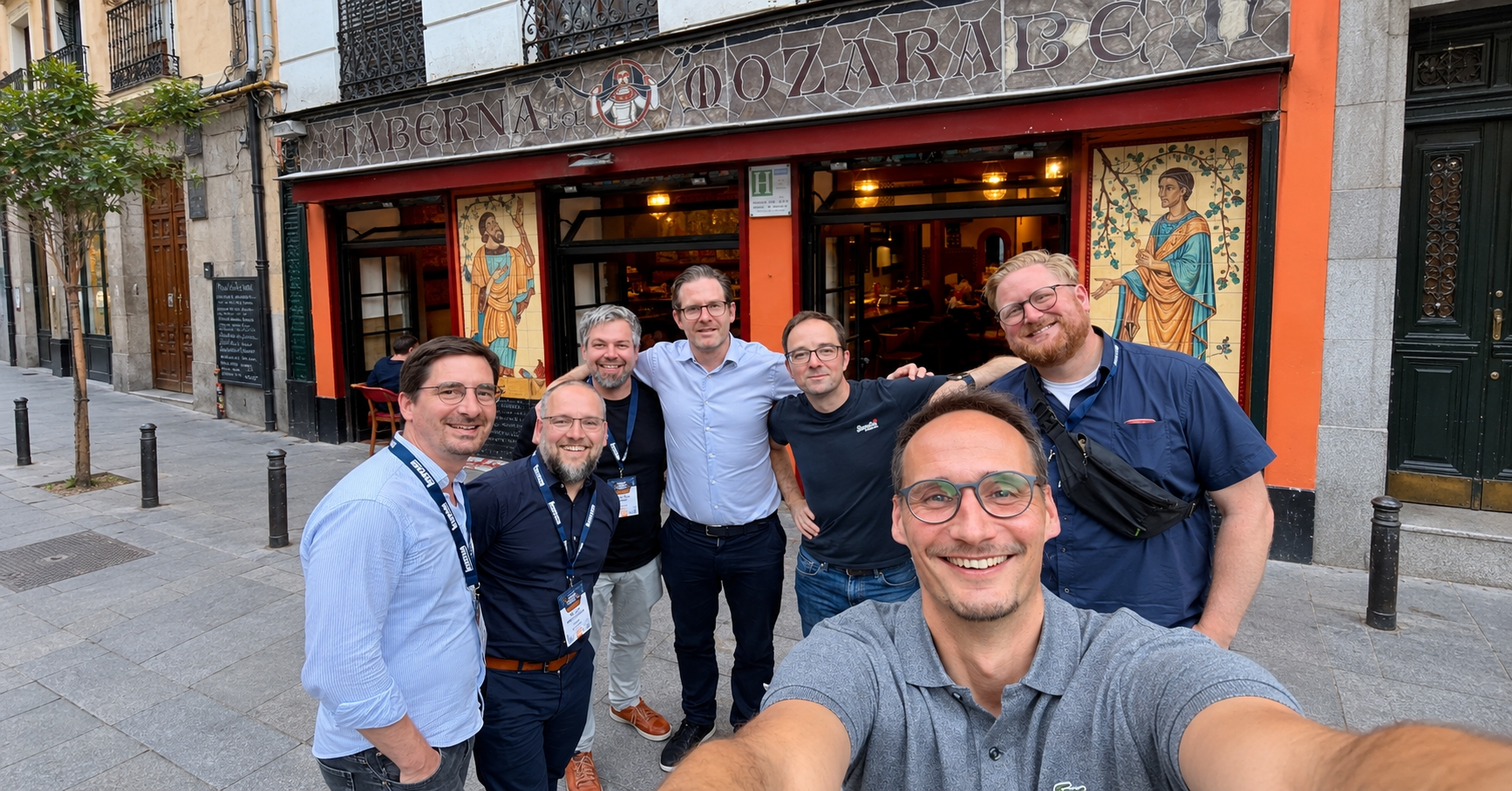
I was in Madrid with my Purple colleagues Stephan Heck and John Rahim, one of around 260 attendees from 27 countries. I spent many years in the senior editorial team of a regional newspaper and now advise publishers. So I look at what was presented there with one question in mind above all: which of these ideas would also work at a German publisher? Here are the three lessons I am taking home.
1. After the click, the relationship is what counts
The pressure is measurable. INMA CEO Earl Wilkinson opened the conference with three figures. Google traffic to publishers fell by 33% within a year. 68% of searches end without a click. And referrals from AI chatbots account for less than 1%. Anyone waiting for search traffic to come back is probably waiting in vain.
That is why the publishers who impressed in Madrid are building their own routes to their audiences. What stood out was how often a supposedly dated format took centre stage. The newsletter. Not as a list of links from each section, though. As a personal product.
A Dutch media company now sends its topic newsletters under the names of individual journalists. A seasoned crime reporter's newsletter still achieves a 70% open rate after a year, and a 26-year-old tech journalist's as much as 85%. The industry average in the Netherlands is around 40%. A Ukrainian outlet has seen something similar: membership emails from a journalist on the front line brought in three times as many sign-ups as professionally designed campaigns.
For regional publishers, this is genuinely good news. They already have the faces readers trust. There is the police reporter. There is the local editor. And there is the sports editor everyone in the county knows. A personal newsletter is the smallest step towards turning that trust into a direct relationship. It needs no new platform and can be tested quickly.
To keep this from becoming an extra burden in day-to-day work, we offer two routes at Purple. The first is newsletters that fill automatically from existing articles, which the newsroom adjusts before sending. The second is personally written newsletters. Both are created in the same system as the website, app and e-paper.
2. AI rarely fails because of the technology
On AI, the debate has noticeably shifted. Which tool is best? That question barely came up in Madrid. The focus was on how the tools land in everyday work. A Finnish media company gave every journalist three hours of one-to-one coaching from experienced colleagues, close to 1,400 hours so far. A Spanish media group paused new AI projects for three months to settle responsibilities and rules first.
Refreshingly, speakers were also open about what does not work. A Norwegian media company uses AI to turn premium articles into short videos. The best of them achieve a click-through rate of more than 25% back to the article. Even so, reporters are using the tool less and less. The reason is as mundane as it is instructive: each video still takes them ten to 15 minutes.
For me, the lesson is this: good technology alone is not enough. New formats and AI tools catch on when they take work away rather than create more of it. The crucial question is what genuinely helps in the newsroom, rather than what is possible. That is what we designed Purple Workflows around. Preconfigured workflows process incoming content such as press releases, create drafts from mobile recordings and prepare finished articles for web, social media or print. With our reporter app, reporters capture text, photos, audio or video directly on their smartphone, and everything arrives in the system as a story. The final decision always rests with the newsroom. That is where it belongs.
3. Young readers take patience
The most honest take on young audiences came from a young TikTok journalist from Belgium. With a two-person team and around 20 minutes per video, he has made his newspaper the most-followed news brand in the country on TikTok. Does it bring in subscriptions? He does not even claim that himself. For him, the platforms are a shop window for the brand.
A Swedish regional publishing group is therefore playing the long game. And doing so consistently. Everyone under 25 reads its digital offering free of charge, with no trial period and no time limit. At 25, the subscription renews automatically at half price, and at 30 at full price. The results speak for themselves. The number of subscribers under 25 rose by 400%, and 90% of them are entirely new customer relationships. And 35% of those who have aged out of the offer are now paying.
I see two further observations as transferable. First, the faces do not have to be young. The Belgian TikTok journalist also coaches experienced colleagues over 40 to answer audience questions in short videos. Second, good entry products are often small. A fixed-run newsletter on saving money achieved a 67% open rate, and 85% of readers stayed until the end.
Audio can be a way in, too. A Spanish digital outlet reaches younger people mainly through its daily podcast, which has 1.5 million listeners. A Swiss politics podcast draws an audience of around 30-year-olds to its live recordings.
I see a real opportunity here for regional publishers. Every publisher has voices and content that local people know. Together with our partner beatsquares, which specialises in automated podcast and audio production, we integrate formats like these closely with Purple. That way, website, app, newsletter and podcast all come from a shared foundation.
The INMA dinner with Piano and conversario
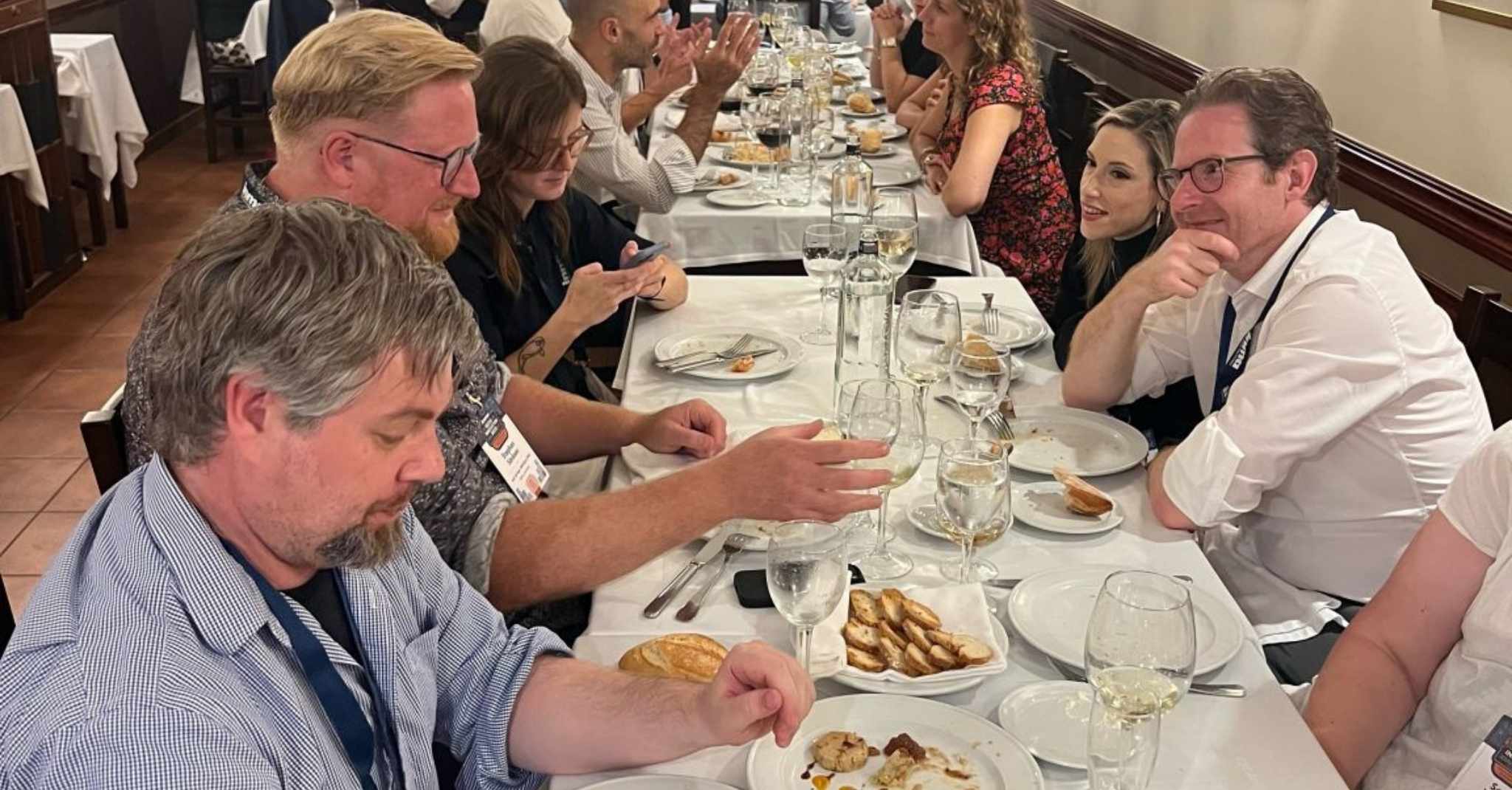
You come for the programme, but it is the relationships that bring you back. That is how Kevin Kallenbach, formerly Head of Sales at Purple and now CEO of conversario, summed up the week afterwards. It would be hard to put it better. Many conversations from the sessions carried on into the evening. Together with our partners Piano and conversario, we hosted what has become our traditional INMA dinner. More than 30 people from publishers across Europe joined us.
Special thanks go to my colleague John, who organised the evening. Thanks also to Kevin Kallenbach and Manuel Heydenreich, and to Clemens Hammacher, Joris Bak and Rafaela Campani Nygaard, for their support. And, of course, to all the guests who chose this particular evening in a week full of invitations.
From Madrid to Berlin
Earl Wilkinson put it in a nutshell in his opening: in the age of AI, reach, speed and the individual article are no longer scarce. What remains scarce is trust, editorial judgement and personal relationships. For regional publishers, that is more of an opportunity than a threat. These are exactly the areas where they have always been strong. That is why the best days of local journalism are still ahead of us.
We are taking many of the questions from Madrid with us to Berlin. At Purple Connect on 4 and 5 November, which I am moderating, Professor Alexandra Borchardt of the Reuters Institute will give the keynote 'Nähe ist die neue Reichweite' (Proximity is the new reach). Heidenheimer Zeitung will show how it is bringing AI into everyday newsroom work. There will also be more first-hand reports from publishers, along with answers to many of the questions that occupied us in Madrid.
You can secure your place here. And if you would like to talk about any of these topics beforehand, I look forward to hearing from you.
Über den Autor
Timo Lamour leads marketing at Purple. He studied media studies and worked as a freelance contributor at the daily newspaper Die Glocke before joining Purple in 2017, where he grew from working student to Head of Marketing.
More practice. More details.
For a deeper dive, you'll find case studies, webinars, and insights from our daily editorial work, featuring concrete use cases, learnings, and best practices for Purple Prompts.


Monthly updates you actually need.
Receive product updates, webinar dates, and brief practical insights on editorial, experience, AI, and integrations. Concise, infrequent, and spam-free.